

Industry guide
Start with the account record before scaling leads.
Google's current United States eligibility list includes lawyers and multiple legal service categories, including bankruptcy, business, contract, criminal, disability, DUI, estate, family, immigration, intellectual property, labor, litigation, malpractice, personal injury, real estate, and traffic law services.
Availability still depends on the market and the checks Google requests. Keep the firm name, professional licenses, practitioner details, service categories, and advertised locations aligned. A broad legal label should not replace the specific categories the firm is prepared to accept.
Trust path
Google Verified
Confirm the public verification route before scaling the account.
Customer path
Client inquiries
Review how new inquiries move from search result to response.
Account context
Profile, calls, reviews
Keep service area, responsiveness, and lead quality connected.
Next move
Review before edits
Avoid changing budget, categories, or routing from one weak signal.
Google Verified Local Services Ads for Law Firms
Insights from Scaling and Managing 10+ Law Practices
Did you know 80% of local searches convert into clients?
It's time to boost your local marketing. With Google Local Services Ads for law firms, you can attract high-quality leads without exceeding your budget.
Discover how Google Local Services Ads can deliver results for your law practice.
Ready to increase your local reach? Contact us online or call (725) 567-5861 to discuss our Google Local Services Ad management plans. Let PrimeLSA help your law firm complete the Google Verified path and become a top local choice.
How Local Services Ads work for Law Firms
Local Services Ads can place law firms in prominent Google Search results and let clients call or message the business from its profile. Google says advertisers pay for leads related to the business and its listed services, rather than for an ordinary visit to the profile.
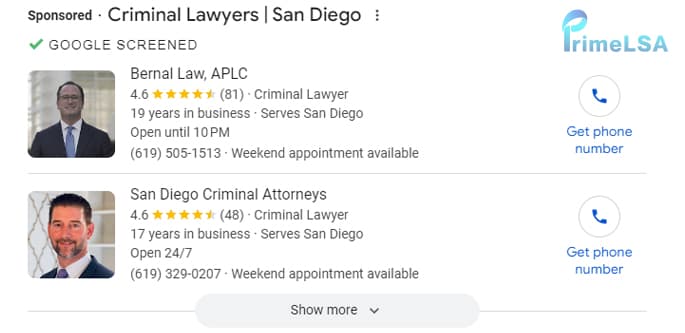
A law firm profile can show services, location coverage, reviews, business details, and available contact methods. Searchers may also filter providers by the specific legal services they need.
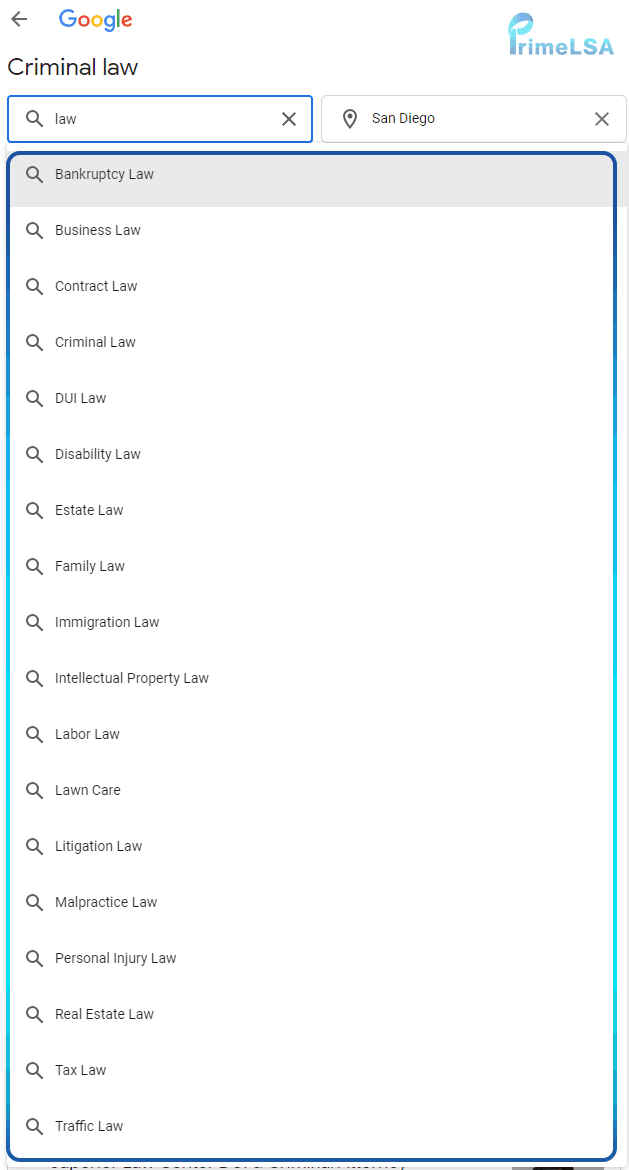
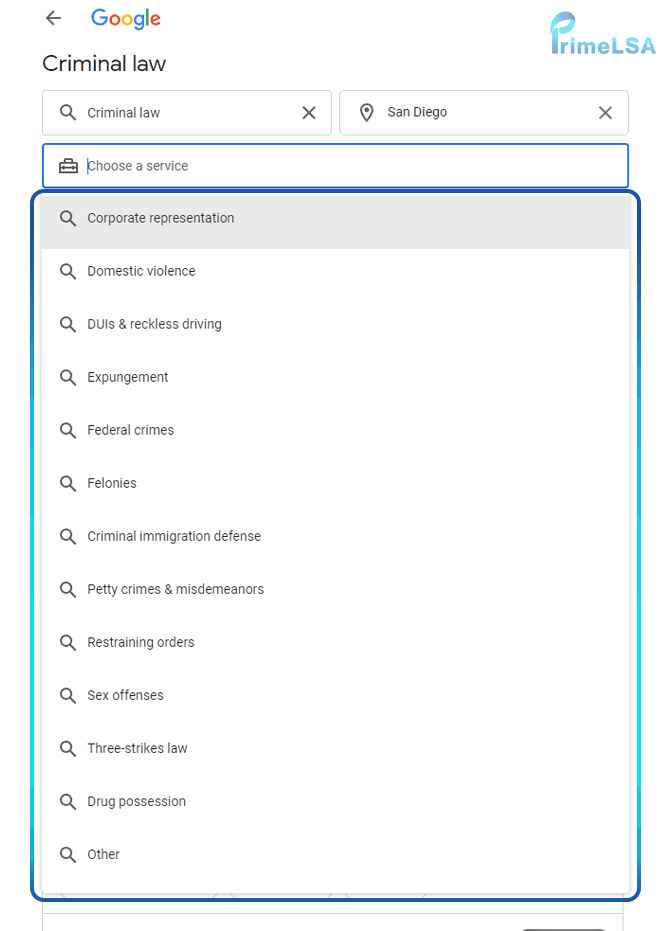
This makes the profile and intake workflow part of the sale. Visibility has limited value when the person answering cannot confirm service fit, timing, or the next step.
Google Verified, formerly Google Screened
Google now uses one Google Verified badge for eligible Local Services Ads advertisers that complete the required screening and verification process. Google announced the transition in August 2025 and began replacing Google Guaranteed, Google Screened, License Verified by Google, and the Money Back Guarantee in October 2025.
For this category, Google Screened is the former name many owners, searchers, screenshots, and older guides still use. The established page and terminology remain useful historical context, but Google Verified is the current badge.
Google's current Google Verified documentation says eligible existing advertisers transition automatically and the badge-name change does not affect Local Services Ads ranking.
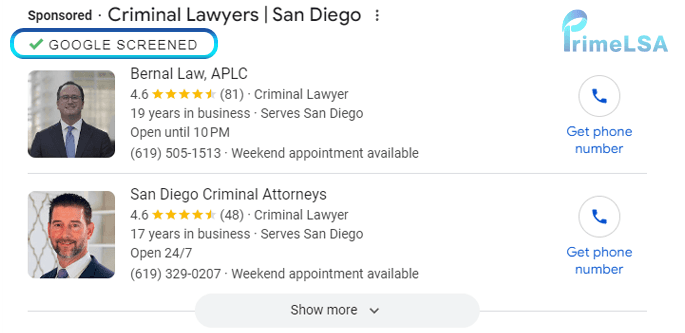
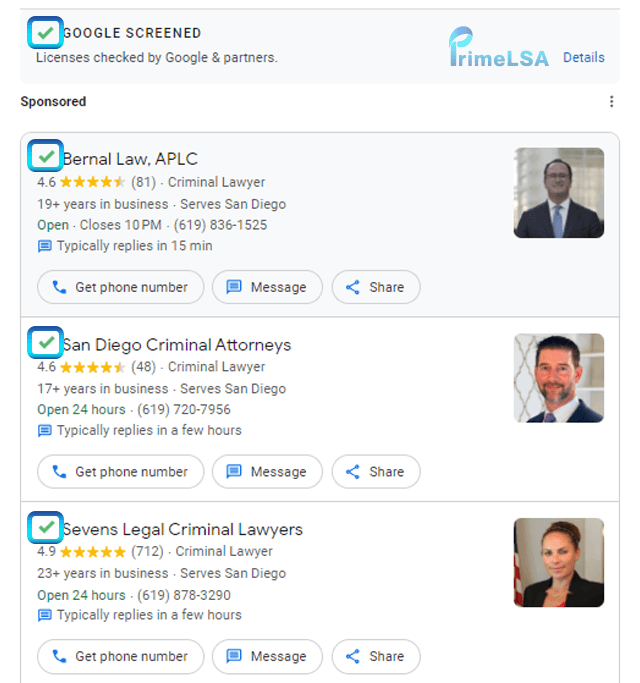
These screenshots show the former Google Screened badge. They are retained so teams can recognize older account views and search language; current eligible profiles use Google Verified.
Google also discontinued the Money Back Guarantee. Its current documentation limits reimbursement requests to eligible services booked through Local Services Ads before December 7, 2025, subject to the stated submission deadline.
The badge is evidence that the listed verification checks were completed. It is not proof of rank, lead quality, response quality, or business performance.
For the historical term and its earlier requirements, see the Google Screened guide.
A legal inquiry decision map by matter, urgency, and ownership
A law firm can review LSA inquiries through three decisions. First, does the requested matter fit a practice area and jurisdiction the firm accepts? Second, does the inquiry carry a deadline or safety concern that needs an urgent internal route? Third, who owns the next contact, consultation, conflict review, or decline message? Each answer changes the intake path without requiring the ad team to make a legal judgment.
Practice-area fit should use the firm's written acceptance rules. Criminal defense may need an immediate attorney or trained intake handoff. Estate planning may move to a scheduled consultation with document guidance. Personal injury may require event date, location, injury type, and representation status before the firm decides whether to continue. Family matters may require a conflict-aware process before the caller shares sensitive details.
The map should also handle cases the firm will not accept. Route existing clients to support, wrong jurisdictions to a controlled decline or referral path, conflicts to the firm's policy, and unsupported matters away from the consultation calendar. Record the outcome category so repeated mismatch can inform category, location, and intake reviews.
- Matter fit: accepted practice area, adjacent practice area, or unsupported matter.
- Location fit: court, incident, property, employer, or client location relevant to the firm's rules.
- Urgency: filing date, hearing, arrest, removal risk, active dispute, or no immediate deadline.
- Conflict path: minimum identifying details collected under the firm's process before substantive intake.
- Consultation path: immediate handoff, scheduled call, document request, or attorney review.
- Ownership: named intake person, attorney, team queue, or approved referral and decline route.
- Outcome: attended consultation, missed consultation, engaged matter, declined matter, or pending follow-up.
- Account review: repeat mismatch checked against practice categories, geography, messaging, and response coverage.
Law-firm LSA economics begin with retained matters, not raw calls
A legal inquiry is not a sale. The useful chain is lead, qualified prospect, scheduled consultation, attended consultation, signed engagement, and retained matter. A firm can report a low lead cost while losing money after conflicts, practice-area mismatch, missed consultations, or poor follow-up are counted.
Practice area changes the commercial picture. An estate-planning consultation, an urgent criminal-defense call, and a personal-injury inquiry have different timelines, qualification questions, staffing demands, and potential case values. Calculate each path separately, then compare the results.
- Track qualification and retained-matter outcomes by practice area.
- Separate consultation bookings from consultations held.
- Record conflicts, jurisdiction mismatch, and matters the firm cannot accept.
- Compare acquisition cost with collected revenue on a timeframe that fits the matter type.
Legal intake has to identify fit before the consultation calendar fills
The first conversation should establish the type of matter, relevant location, timing, opposing parties, and whether an urgent deadline may exist. Intake staff need a clear route for matters the firm handles, a safe escalation path for time-sensitive inquiries, and a respectful decline process for cases outside scope.
Privacy matters. The intake workflow should collect only what the firm needs at that stage and avoid inviting detailed confidential facts before the firm completes its own conflict and engagement process.
- Confirm practice-area fit and the jurisdiction connected to the matter.
- Route urgent deadlines to the right attorney or trained intake owner.
- Track who scheduled, attended, and completed a consultation.
- Keep declined-matter reasons consistent enough to expose targeting gaps.
Which law-firm LSA outcomes belong on the same scorecard?
A useful legal LSA scorecard follows the matter from first contact through qualification, consultation, engagement, and retained work. Lead count belongs at the start of that record, not at the end. The firm should be able to see where a relevant inquiry stopped and which role owned the next step.
Report practice areas separately. A single blended conversion rate can hide a strong criminal-defense intake path beside a weak estate-planning follow-up path. Keep wrong jurisdiction, conflicts, existing-client calls, unsupported matters, missed consultations, unsigned engagement letters, and retained matters as distinct outcomes.
- Inquiry received and answered by the intake owner.
- Practice area, jurisdiction, urgency, and conflict path reviewed.
- Consultation scheduled, attended, rescheduled, or missed.
- Engagement offered, signed, declined, or still pending.
- Retained matter connected to its original LSA inquiry where the firm's records allow it.
A weekly legal LSA review should explain accepted and declined inquiries
Review a sample of accepted, declined, and unresolved inquiries by practice area each week. The firm should be able to trace who answered, which acceptance rule applied, whether a consultation was offered, and who owned follow-up. Use neutral outcome labels and keep unnecessary confidential facts out of the marketing record.
Repeated declines can expose a category or geography mismatch. Repeated missed consultations point toward reminders, scheduling, or qualification. Qualified prospects who attend but do not engage need attorney or intake follow-up review. The account decision follows the stage that breaks most often.
- Accepted matters by practice area and jurisdiction.
- Declines by conflict, scope, location, timing, affordability, or firm capacity.
- Consultations scheduled, attended, missed, and rescheduled.
- Time from inquiry to first qualified response and next assigned action.
- Unresolved inquiries without a named owner or documented outcome.
- Category, territory, hours, or routing question supported by the week's record.
Legal demand follows the practice, not one universal season
A family-law team, tax practice, estate-planning firm, and criminal-defense office should not use the same seasonal assumptions. Court calendars, filing periods, holidays, weather events, and local enforcement patterns can change when inquiries arrive and how quickly someone expects an answer.
Build staffing around the firm's own inquiry history. Compare weekday and after-hours demand, consultation capacity, attorney availability, and the lag between first contact and signed engagement before treating an impression change as the whole problem.
- Annotate holidays, filing periods, and known office closures.
- Compare after-hours inquiry volume with the firm's actual response coverage.
- Watch consultation backlogs before increasing lead volume.
- Evaluate each practice area on its own decision cycle.
Google Verified eligibility for lawyers is practice-area specific
Google's current United States eligibility list includes lawyers and multiple legal service categories, including bankruptcy, business, contract, criminal, disability, DUI, estate, family, immigration, intellectual property, labor, litigation, malpractice, personal injury, real estate, and traffic law services.
Availability still depends on the market and the checks Google requests. Keep the firm name, professional licenses, practitioner details, service categories, and advertised locations aligned. A broad legal label should not replace the specific categories the firm is prepared to accept.
- Verify that each advertised practice area is available in the target market.
- Keep attorney and firm licensing information current where Google requests it.
- Match profile categories to the intake team's real acceptance rules.
- Recheck eligibility when the firm adds a location, attorney, or practice area.
Example: calls rise while retained matters stay flat
Consider a family-law firm that receives more LSA calls but signs no additional matters. Ad visibility explains only the first stage. Break the calls into wrong jurisdiction, wrong practice area, existing-client support, conflict, unaffordable matter, missed consultation, and qualified prospect who chose another firm.
That breakdown tells the team whether to review category fit, location coverage, intake language, consultation scheduling, or attorney follow-up. It also prevents a budget change from hiding a conversion problem farther down the intake path.
- Planning scenario only; use the firm's own call and engagement records.
- Change one operating variable at a time and annotate the date.
A law-firm LSA workflow from inquiry to retained matter
Start the review with the intake record, then follow each eligible inquiry through the firm's own acceptance process. The intake owner confirms scope and location, the firm handles conflict and consultation rules, and the responsible attorney or intake lead records whether the prospect completed the engagement step.
This sequence keeps ad visibility separate from legal conversion. PrimeLSA organizes the account and lead record. The firm retains authority over legal screening, conflicts, advice, engagement, and case acceptance.
- Inquiry: identify the requested legal service and the location connected to the matter.
- Screen: apply the firm's conflict, scope, deadline, and jurisdiction process.
- Consult: offer the correct consultation path and record attendance.
- Engage: track the engagement decision without treating a scheduled call as a retained matter.
- Review: compare lost stages with category fit, response coverage, and follow-up ownership.
How lawyers can start with Google Verified Local Services Ads
Confirm current category and market eligibility on Google's Local Services page. Then complete the screening and verification steps Google requests for the law firm.
Match the service list and service area to work the business can actually accept. Decide who owns calls, messages, qualification, scheduling, and follow-up before increasing lead volume.
Budget examples from this page's original planning model
- Pay per contact: you pay when potential customers call or message your business, making budget review more tied to real lead flow.
- Estimate leads: if cost per contact is $50, a $1000 budget can support roughly 20 leads.
- Adjust for success: a higher budget, such as $5000, can create more opportunities if the team can handle about 100 contacts.
Treat those figures as a planning example, then compare them with the law firm's actual lead charges, booked work, response capacity, and service mix.
Start driving more leads for your law practice today
Google Local Services Ads are a powerful way to attract local clients to your law practice. This investment can significantly grow your law practice and generate new leads through online methods.
If managing Local Services Ads feels overwhelming, PrimeLSA is here to assist. With over a decade of experience, we specialize in optimizing Local Services Ads to meet your specific needs.
Want to learn more about how PrimeLSA can help your law practice thrive?
Contact us online or call (725) 567-5861 to speak with a strategist about our Google Local Services packages. Let us help you drive more leads and grow your law practice today.
Law-firm intake and October 2026 missed-call charges
Google's October 2026 policy adds a charge path for some unanswered calls. Use the law-firm LSA missed-call intake checklist to compare staffed reception, overflow, practice-area fit, consultations, retained matters, and privacy-safe reporting before changing budget.
What should law firms review before changing LSA settings?
Before changing budget, service categories, profile details, or response workflows, review the account context that affects whether client inquiries become useful opportunities: visibility movement, service-area fit, reviews, lead quality, call handling, replies, and account health.
Which service areas and categories are still accurate?
Are calls, messages, and replies being handled quickly?
Do reviews, profile details, and business information match customer expectations?
Did lead quality, market pressure, or account movement change before the slowdown?