
Industry guide
Start with the account record before scaling leads.
Google's current United States eligibility list includes roofers. The exact verification requests and availability depend on the market, and the business still needs the licenses, registration, and insurance required for the work and location.
Keep the company name, license details, insurance information, business profile, service categories, and territory aligned. If a roofer adds commercial work, a new branch, or a wider storm-response area, verify the account path before assuming the existing setup covers it.
Trust path
Google Verified
Confirm the public verification route before scaling the account.
Customer path
Calls
Review how new inquiries move from search result to response.
Account context
Profile, calls, reviews
Keep service area, responsiveness, and lead quality connected.
Next move
Review before edits
Avoid changing budget, categories, or routing from one weak signal.
Google Verified Local Services Ads for Roofing Companies
Insights from Scaling and Managing Roofing Companies
Did you know 80% of local searches convert into customers?
It's time to boost your local marketing. With Google Local Services Ads for roofing companies, you can attract high-quality leads without exceeding your budget.
Discover how Google Local Services Ads can deliver results for your roofing business.
Interested in boosting your local reach? Contact us online or call (725) 567-5861 to discuss our Google Local Services Ad management plans with a strategist. Let PrimeLSA help your roofing company complete the Google Verified path and become a local favorite.
How Local Services Ads work for Roofing Companies
Local Services Ads can place roofing companies in prominent Google Search results and let customers call or message the business from its profile. Google says advertisers pay for leads related to the business and its listed services, rather than for an ordinary visit to the profile.
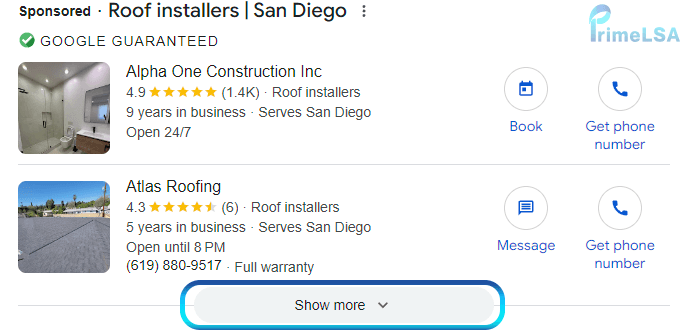
A roofing company profile can show services, location coverage, reviews, business details, and available contact methods. Searchers may also filter providers by the specific roofing services they need.
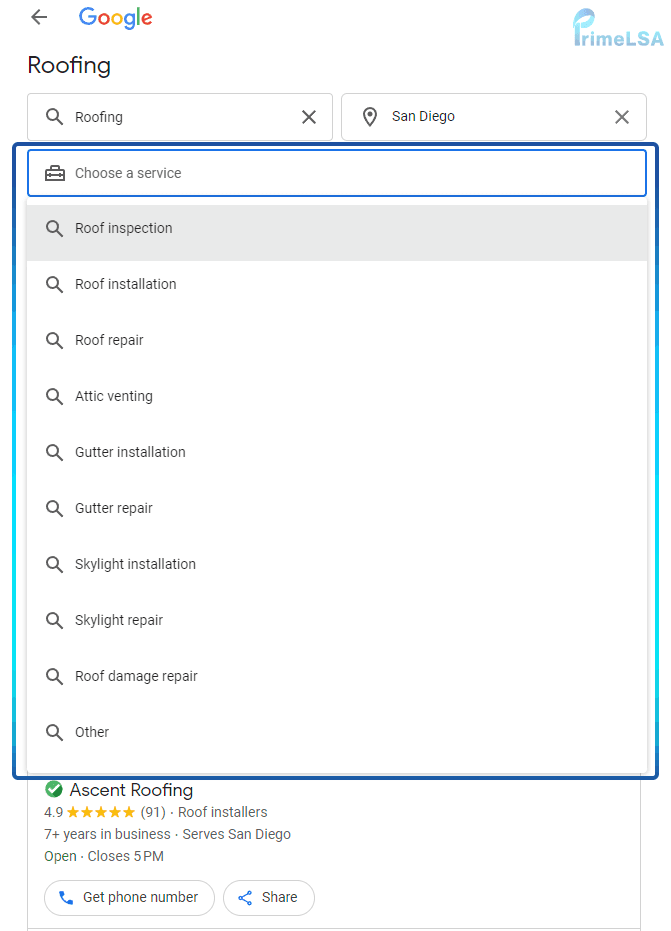
This makes the profile and intake workflow part of the sale. Visibility has limited value when the person answering cannot confirm service fit, timing, or the next step.
Google Verified, formerly Google Guaranteed
Google now uses one Google Verified badge for eligible Local Services Ads advertisers that complete the required screening and verification process. Google announced the transition in August 2025 and began replacing Google Guaranteed, Google Screened, License Verified by Google, and the Money Back Guarantee in October 2025.
For this category, Google Guaranteed is the former name many owners, searchers, screenshots, and older guides still use. The established page and terminology remain useful historical context, but Google Verified is the current badge.
Google's current Google Verified documentation says eligible existing advertisers transition automatically and the badge-name change does not affect Local Services Ads ranking.
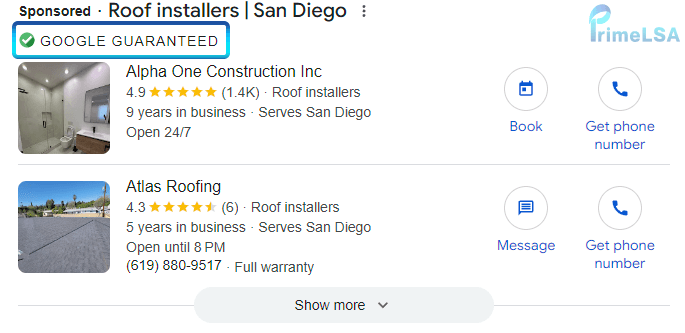
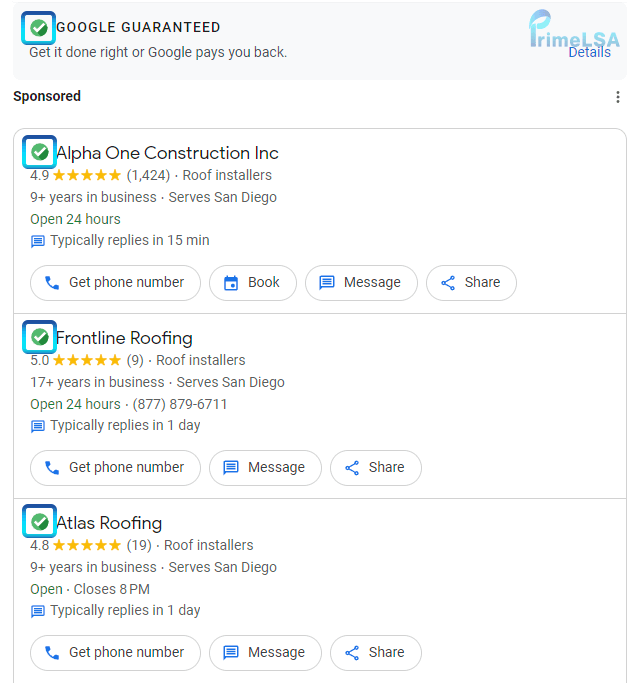
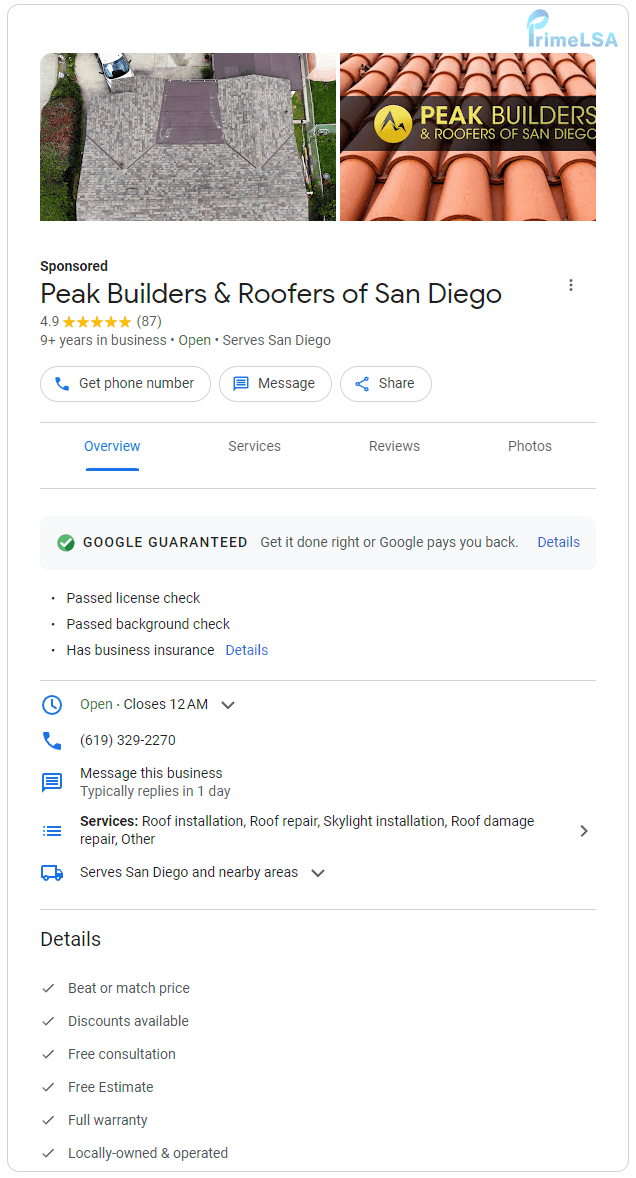
These screenshots show the former Google Guaranteed badge. They are retained so teams can recognize older account views and search language; current eligible profiles use Google Verified.
Google also discontinued the Money Back Guarantee. Its current documentation limits reimbursement requests to eligible services booked through Local Services Ads before December 7, 2025, subject to the stated submission deadline.
The badge is evidence that the listed verification checks were completed. It is not proof of rank, lead quality, response quality, or business performance.
For the historical term and its earlier requirements, see the Google Guaranteed guide.
A roofing demand board for storms, inspections, estimates, and production
Roofing demand needs separate queues before the team judges LSA lead quality. An active leak may need emergency protection. A recent storm may create an inspection request with insurance questions. A planned replacement may involve material, financing, and scheduling choices. Commercial maintenance may require a different estimator and longer approval path.
The office should match each inquiry with the correct field step. Confirm the property type, location, active damage, roof material when known, access, ownership or decision authority, and the reason for the request. Then assign an inspection window that the field team can keep. Keep unassigned requests visible and exclude them from completed sales opportunities.
Production capacity belongs on the same board. Estimators can create a backlog that crews, suppliers, permitting, or weather windows cannot support. During a storm surge, mark emergency stabilization, inspection-only, repair, replacement, and unsupported requests separately. The pattern identifies whether the constraint sits in visibility, qualification, estimating, follow-up, or production.
- Demand lane: active leak, storm inspection, repair, planned replacement, maintenance, or commercial request.
- Property lane: residential, multifamily, commercial, roof type, access, and target service area.
- Insurance lane: no claim, considering a claim, claim opened, adjuster involved, or outside company scope.
- Inspection lane: scheduled, confirmed, completed, rescheduled, cancelled, no-show, or no field capacity.
- Estimate lane: scope pending, delivered, follow-up due, revised, approved, declined, or unreachable.
- Production lane: crew, materials, permit, weather window, travel, and promised start date.
- Lost reason: outside area, unsupported roof, repair minimum, no decision-maker, timing, price, or capacity.
- Review lane: connect the first blocked stage to categories, territory, response, staffing, and demand source.
Roofing economics split between repair, replacement, and inspection work
An active leak repair, post-storm inspection, planned reroof, commercial maintenance request, and insurance-related inquiry have different sales cycles and field costs. A call that produces an inspection is not yet a sold roof, so lead cost should be read beside inspection completion, estimate delivery, close rate, job size, crew capacity, and material availability.
Territory also affects margin. Long travel for a small repair may not fit, while a replacement farther away may still be viable. Service-area decisions should reflect the work type the caller needs, not mileage alone.
- Separate repair, replacement, inspection, maintenance, and emergency tarp inquiries.
- Track completed inspections and delivered estimates before counting sales opportunities.
- Connect booked work to crew schedule, material lead time, and travel.
- Distinguish homeowner demand from commercial and insurance-related workflows.
Roofing intake should qualify the property and the next field step
The intake owner should confirm the property address, building type, active leak or damage, roof age and material when known, storm timing, insurance involvement, and whether the caller can authorize an inspection. That information determines whether the next step is emergency protection, an inspection, a repair estimate, or a replacement consultation.
Fast scheduling matters after a storm, but overpromising creates missed windows and poor follow-up. Give the office a clear capacity view so it can set accurate expectations and route urgent damage separately from routine estimates.
- Confirm property ownership or decision authority before sending a crew.
- Separate active leaks from inspection-only and replacement inquiries.
- Record roof type, property type, access limits, and known storm date.
- Track inspection scheduled, inspection completed, estimate sent, and job sold.
Which roofing LSA outcomes show whether demand became sold work?
Roofing teams should follow an inquiry through inspection, estimate, decision, and production. Calls alone cannot show whether the property fit the service area, whether the inspection occurred, whether the estimator delivered a scope, or whether the company had crew and material capacity for the requested work.
Keep repairs, replacements, commercial maintenance, emergency tarp work, and insurance-related inquiries separate. Each path uses different field time and sales follow-up. A high inspection count can still produce weak revenue when estimates arrive late or the production calendar cannot support the promise.
- Property and service-area fit confirmed before an inspection promise.
- Inspection scheduled, completed, rescheduled, cancelled, or no-showed.
- Repair, replacement, maintenance, tarp, or unsupported request recorded.
- Estimate delivered, follow-up assigned, decision received, or opportunity lost.
- Sold work checked against crew calendar, material timing, and job location.
A weekly roofing LSA review should follow inspection and estimate backlog
Start with every open inspection request and delivered estimate, then identify its owner and next date. Separate storm inspections, active leaks, repairs, replacements, maintenance, and commercial work. The backlog should show whether intake, field inspection, estimating, customer follow-up, or production holds the opportunity.
Compare lost inquiries with current service claims and crew plans. Many inspection requests with no available estimator suggest a capacity issue. Completed inspections without delivered scopes suggest an estimating delay. Approved estimates without production dates suggest a crew, material, permit, or weather constraint.
- Unscheduled inspection requests and the reason no appointment was offered.
- Scheduled inspections that were cancelled, missed, or never completed.
- Completed inspections waiting for scope, pricing, or customer delivery.
- Delivered estimates without a dated follow-up owner or customer decision.
- Approved work waiting for materials, permit, crew, or weather window.
- Territory, service, staffing, or response question supported by the backlog.
Roofing demand can surge faster than inspection capacity
Hail, wind, heavy rain, wildfire exposure, and seasonal temperature limits can change both demand and the work crews can safely complete. A short surge may fill inspection calendars long before it fills the installation schedule.
Annotate weather events and capacity changes when reviewing LSA performance. Otherwise a surge followed by a slowdown can look like an advertising failure even when the market, crew schedule, or material pipeline changed first.
- Map storm dates against calls, inspections, estimates, and sold work.
- Adjust intake promises to current inspection and crew capacity.
- Plan separate coverage for emergency tarping and routine estimates.
- Review service areas when weather or permit timelines alter travel and scheduling.
Roofers need current market eligibility and matching credentials
Google's current United States eligibility list includes roofers. The exact verification requests and availability depend on the market, and the business still needs the licenses, registration, and insurance required for the work and location.
Keep the company name, license details, insurance information, business profile, service categories, and territory aligned. If a roofer adds commercial work, a new branch, or a wider storm-response area, verify the account path before assuming the existing setup covers it.
- Check Local Services Ads availability in each target market.
- Keep requested licenses, registration, and insurance documents current.
- Advertise only services the crews and credentials support.
- Review profile and verification details after a branch or territory change.
Example: a storm creates leads but the estimate pipeline stalls
Consider a roofer that receives a wave of calls after hail. The account looks busy, yet few jobs close. Break the pipeline into wrong property type, outside territory, inspection scheduled, no-show, inspection completed, estimate delayed, insurance-only request, repair-only request, and replacement opportunity.
That view can expose an inspection or estimating bottleneck before the team blames visibility. The useful next action may be a smaller territory, faster estimate delivery, or separate routing for repairs and replacements.
- Planning scenario only; use the roofer's own inspection and sales records.
- Compare storm-driven demand with capacity before changing spend.
A roofing LSA workflow from storm call to production calendar
A roofing inquiry moves through distinct field gates. Intake confirms the property, damage, urgency, building type, and decision-maker. The office schedules the correct inspection, the estimator documents the proposed work, and production checks crew and material availability before the company commits to timing.
Storm periods need a separate queue from ordinary reroof and maintenance demand. Without that separation, a surge of inspection requests can look healthy while estimators, crews, or materials become the real constraint. Review the stage where opportunities stop before expanding the service area or budget.
- Qualify: identify repair, replacement, inspection, maintenance, or emergency work.
- Inspect: confirm appointment ownership and the field outcome.
- Estimate: record scope delivery and the next customer decision date.
- Sell: distinguish approved work from open, declined, and unreachable estimates.
- Produce: align sold work with crews, materials, travel, and weather windows.
How roofers can start with Google Verified Local Services Ads
Confirm current category and market eligibility on Google's Local Services page. Then complete the screening and verification steps Google requests for the roofing company.
Match the service list and service area to work the business can actually accept. Decide who owns calls, messages, qualification, scheduling, and follow-up before increasing lead volume.
Budget examples from this page's original planning model
- Pay per contact: you pay when potential customers call or message your business, making budget review more tied to real lead flow.
- Estimate leads: if cost per contact is $10, a $500 budget can support roughly 50 leads.
- Adjust for success: a higher budget, such as $2000, can create more opportunities if the team can handle about 200 contacts.
Treat those figures as a planning example, then compare them with the roofing company's actual lead charges, booked work, response capacity, and service mix.
Start Driving More Leads for your Roofing Business Today
Google Local Services Ads are a powerful way to attract local customers to your roofing business. This investment can significantly grow your roofing business and generate new leads through online methods.
If managing Local Services Ads feels overwhelming, PrimeLSA is here to assist. With over a decade of experience, we specialize in optimizing Local Services Ads to meet your specific needs.
Want to learn more about how PrimeLSA can help your roofing business thrive?
Contact us or call (725) 567-5861 to speak with a strategist about our Google Local Services packages. Let us help you drive more leads and grow your roofing business today.
What should roofing companies review before changing LSA settings?
Before changing budget, service categories, profile details, or response workflows, review the account context that affects whether calls become useful opportunities: visibility movement, service-area fit, reviews, lead quality, call handling, replies, and account health.
Which service areas and categories are still accurate?
Are calls, messages, and replies being handled quickly?
Do reviews, profile details, and business information match customer expectations?
Did lead quality, market pressure, or account movement change before the slowdown?